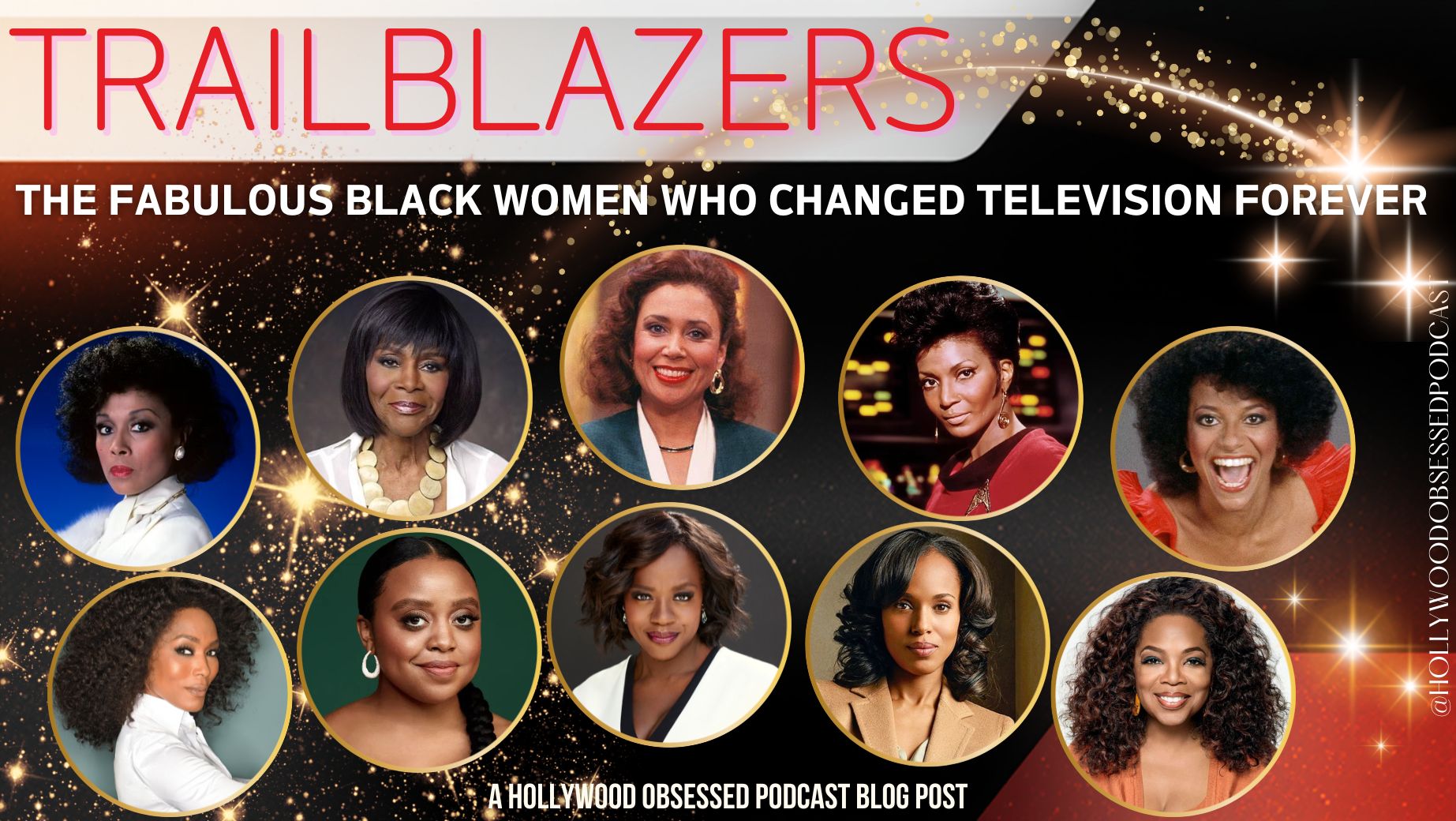
Trailblazers: The Fabulous Black Women Who Changed Television Forever
Growing up, I was completely obsessed with television—especially shows centered on powerful, unforgettable women. That passion was shaped at home, raised by two remarkable women who taught me early on that brilliance, resilience, and fabulousness can take many forms.
So naturally, I devoured series like Wonder Woman and The Bionic Woman. But I was just as captivated by The Jeffersons, Good Times, The Cosby Show, and Dynasty —all of which also centered strong, compelling women in leading roles. Night after night, decade after decade, I was exposed to a range of stories, cultures, and perspectives that widened my world. Television became my window to everything beyond my own experience.
But that window didn’t just magically appear. It was built by fearless pioneers—women both in front of and behind the camera—who fought for representation, visibility, and authentic storytelling. These trailblazers took bold, often risky first steps so all television viewers could see themselves reflected on screen.
After my recent conversations with the legendary actress, screenwriter, and author Denise Nicholas (from Room 222 and In the Heat of the Night) on Hollywood Obsessed (Episodes 157 & 158), I found myself reflecting on the many other extraordinary Black women who shattered barriers, redefined pop culture, and reshaped the television landscape forever. They didn’t just entertain us—they changed us, expanded us, and deepened our understanding of who we are as a nation.
So let’s celebrate them. Here’s a quick—but powerful—look at the incredible Black women who transformed the way we watch television… forever.
*************************************************
DIAHANN CARROLL
Diahann Carroll was the very definition of a television trailblazer—elegant, groundbreaking, and quietly revolutionary. In 1968, she made history starring in Julia, becoming the first Black woman to headline a network television series without being cast as a maid, nanny, or domestic worker. At a time when Hollywood rarely allowed Black women to exist on screen as fully realized professionals, Carroll’s Julia Baker—a widowed nurse and devoted mother—embodied intelligence, grace, and modern womanhood. It was a radical and necessary shift in representation, offering millions of viewers their first sustained glimpse of a Black woman portrayed with dignity, sophistication, and emotional depth in primetime.
Then came the unforgettable Dominique Devereaux on Dynasty—all shoulder pads, couture gowns, and delicious diva energy. Carroll swept into the Carrington universe with champagne in hand and scene-stealing confidence, proving that Black women could be glamorous, powerful, cunning, and fabulous on their own terms. Dominique wasn’t just a character—she was a cultural moment.
In 2011, Carroll was inducted into the Television Academy Hall of Fame, cementing her legacy as a true pioneer who opened doors for generations of Black actresses to follow. Diahann Carroll didn’t just break barriers—she reimagined what was possible on television, one dazzling entrance at a time.
*************************************************
NICHELLE NICHOLS
Nichelle Nichols didn’t just make television history—she helped reshape the cultural imagination of what was possible. As Lieutenant Nyota Uhura on Star Trek, she embodied one of the first major, non-stereotypical roles for a Black woman on American television. Uhura was not a servant or a side note—she was a skilled communications officer, a respected bridge officer, and an equal among her peers in a boldly diverse vision of the future. For millions of viewers, seeing a Black woman portrayed with intelligence, authority, and dignity in primetime was nothing short of revolutionary.
In 1968, Nichols helped create one of television’s most unforgettable moments when Uhura shared what is often cited as the first interracial kiss on American television with Captain James T. Kirk, played by William Shatner. The scene was daring, controversial, and groundbreaking—an image that challenged social norms and expanded the possibilities of representation. Around that same time, Nichols considered leaving the series, but a life-changing conversation with civil rights leader Martin Luther King Jr. convinced her to stay. King called her a “vital” role model and told her that her presence on Star Trek was as important to the Civil Rights Movement as the marches happening across the country.
Nichols carried that sense of purpose far beyond the screen. From 1977 to 2015, she worked closely with NASA to help recruit women and people of color into the astronaut corps—efforts that helped diversify the face of American space exploration. In 1991, when the original Star Trek cast was honored at Grauman’s Chinese Theatre, she became the first African American to place her handprints and signature in the legendary forecourt. Actress, singer, dancer, and activist, Nichelle Nichols didn’t just break barriers—she expanded horizons, inspiring generations to see themselves in the future she helped bring to life.
*************************************************
DENISE NICHOLAS
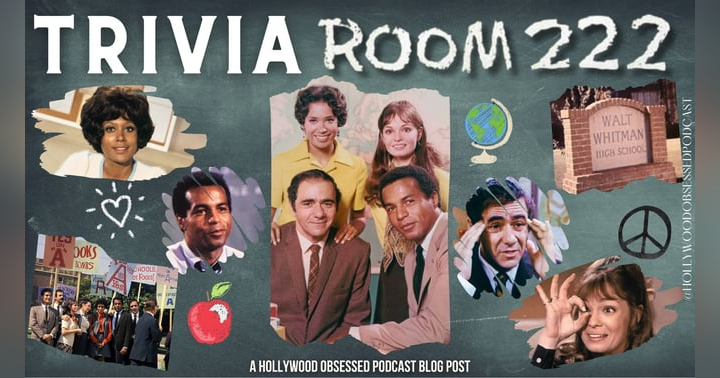
Denise Nicholas is a pioneering actress, writer, and activist whose work helped redefine how Black women were seen on American television. She rose to national prominence in the late 1960s as Liz McIntyre on Room 222—one of the first Black female leads to portray a professional, middle-class woman without relying on stereotypes. As a high school guidance counselor—a role of authority and influence that most audiences had rarely seen a Black woman occupy—Liz was intelligent, compassionate, and deeply respected, becoming a role model for a generation and earning Nicholas two Golden Globe nominations. Long before Hollywood came calling, she was also a founding member of the Free Southern Theater, performing throughout the Deep South during the height of the Civil Rights Movement—often under threat by the KKK—bringing art, education, and empowerment directly to Black communities.
Nicholas continued breaking ground with her powerful portrayal of Councilwoman Harriet DeLong on In the Heat of the Night. As one of the show’s central figures, she portrayed a poised and principled civic leader navigating race, politics, and community in the American South. Her character’s evolving relationship with Police Chief Bill Gillespie, played by Carroll O'Connor, led to a groundbreaking interracial romance and eventual marriage—an important and nuanced storyline for primetime television. Behind the scenes, Nicholas also made her mark as a writer, penning six episodes of the series and further shaping its voice and vision.
After her acting career, Nicholas expanded her storytelling into literature. Her acclaimed debut novel Freshwater Road (2005), which chronicles the Mississippi Freedom Summer, earned the prestigious Zora Neale Hurston/Richard Wright Award for debut fiction. In recent years, she has been honored as a National Living Legend by the Career Mastered Awards for her lasting impact on American culture and history. Her memoir, Finding Home, was published by Agate Publishing in November 2025 and is available now in bookstores and online. Denise Nicholas didn’t just break barriers—she built bridges between art and activism, using her voice to inspire, uplift, and create lasting change.
To hear more about this fabulous trailblazer, don’t miss my unforgettable conversation with Denise on Hollywood Obsessed—Episodes 157 & 158. Click HERE to listen now.
*************************************************
ROXY ROKER
As Helen Willis on The Jeffersons, Roxie Roker helped quietly revolutionize what love and family looked like on primetime television. As one half of one of TV’s first regularly featured interracial married couples, she brought warmth, humor, and intelligence to a role that broke real social barriers in American living rooms. Beyond The Jeffersons, Roker popped up across television throughout the ’70s, ’80s, and ’90s—from Punky Brewster to Murder, She Wrote—while also appearing in landmark projects like Roots and Claudine. Off-screen, she was just as impactful, dedicating herself to children’s advocacy and community work in Los Angeles. Roxie Roker didn’t just normalize inclusion on TV—she made it feel natural, joyful, and long overdue.
*************************************************
ESTHER ROLLE
Esther Rolle redefined Black motherhood on television with strength, dignity, and unapologetic truth. As Florida Evans on Maude and its groundbreaking spin-off Good Times, Rolle insisted on portraying a loving, principled matriarch who held her family together with faith and resilience. She was fiercely protective of how Black families were depicted on screen, advocating for authenticity at every turn—and audiences felt that integrity in every performance. Her work earned her a Golden Globe nomination and, later, an Emmy win for Summer of My German Soldier, making her the first Black actress to win in the category Outstanding Supporting Actress in a Limited Series or Special for a television film.
Her impact extended far beyond the screen—she became the first woman to receive the NAACP Chairman’s Civil Rights Leadership Award, cementing her legacy as both an artist and an activist who demanded respect for Black stories and Black families.
*************************************************
CICELY TYSON
Cicely Tyson didn’t just act—she elevated television into art. Over a career spanning seven decades, she consistently chose roles that honored the dignity, complexity, and humanity of Black women. From early breakthroughs on East Side/West Side to her unforgettable, Emmy-winning performance in The Autobiography of Miss Jane Pittman, Tyson became the first Black woman to win an Emmy for Lead Actress in a drama. Her performances in Roots, King, A Lesson Before Dying, and beyond set a gold standard for excellence, earning her multiple Emmy nominations and two historic wins.
Her legacy reached far beyond television: she received the Kennedy Center Honors, the Presidential Medal of Freedom, and an Honorary Academy Award. Cicely Tyson didn’t just open doors—she transformed the entire landscape of storytelling with grace, purpose, and power.
*************************************************
LESLIE UGGAMS
Leslie Uggams shattered barriers with talent, charm, and unstoppable charisma. In 1969, she became the first Black woman in the modern era to host her own network variety show, The Leslie Uggams Show, blazing a trail for performers of color in mainstream entertainment. She later delivered one of television’s most unforgettable performances as Kizzy in Roots, earning both Emmy and Golden Globe nominations and cementing her place in TV history. Whether starring in daytime drama, hosting game shows, or lighting up the stage, Uggams has built a career defined by versatility and firsts—proving that Black women could lead, entertain, and captivate across every genre television had to offer.
*************************************************
PHYLICIA RASHAD
As Clair Huxtable on The Cosby Show, Phylicia Rashad helped redefine what Black family life looked like on television. Elegant, educated, loving, and strong, Clair was a high-powered attorney and devoted mother who balanced career and family with intelligence and warmth—shattering outdated stereotypes in the process. Rashad’s performance earned her multiple Emmy nominations and made Clair Huxtable one of the most beloved TV matriarchs of all time.
Beyond that iconic role, Rashad has continued to elevate television with powerful performances in A Raisin in the Sun, This Is Us, The Gilded Age, and more—while also becoming a Tony Award–winning force on the stage. She didn’t just change perceptions—she set a new standard.
*************************************************
DEBBIE ALLEN
Debbie Allen is a true powerhouse—an actress, dancer, choreographer, director, and producer who has shaped television both in front of and behind the camera. She broke new ground starring in Fame, becoming the first Black woman to win a Golden Globe for Best Actress in a TV musical or comedy, and earning multiple Emmy nominations for her work. But Allen’s greatest legacy may be behind the scenes, where she has directed and produced influential shows like A Different World and Grey’s Anatomy, helping to cultivate new generations of diverse talent.
From Good Times to Roots: The Next Generations and beyond, Debbie Allen’s career is a masterclass in longevity, creativity, and leadership. She didn’t just perform in television history—she helped choreograph it.
*************************************************
OPRAH WINFREY
Oprah Winfrey didn’t just change television—she changed the entire media landscape. As the host and driving force behind The Oprah Winfrey Show, she became the first Black woman to own and produce her own nationally syndicated talk show, transforming daytime TV into a platform for empathy, conversation, and cultural change. For 25 years, Oprah informed, inspired, and uplifted millions, while launching careers and shaping public dialogue.
Through Harpo Productions and the creation of OWN: Oprah Winfrey Network, she built a media empire rooted in storytelling and empowerment. Oprah didn’t just host television—she redefined what television could be.
*************************************************
KERRY WASHINGTON
Kerry Washington made television history as Olivia Pope on Scandal, becoming the first Black woman in nearly 40 years to lead a network primetime drama. As the brilliant, stylish, and morally complex crisis manager, Washington commanded the screen and captivated audiences worldwide. Her performance earned multiple Emmy and Golden Globe nominations and redefined what a leading lady could look like in modern television.
Beyond acting, Washington has stepped behind the camera as a director and producer, continuing to shape powerful, inclusive storytelling. With Scandal, she didn’t just play a lead—she reopened the door for Black women to lead network television again.
*************************************************
VIOLA DAVIS
Viola Davis delivered one of the most powerful performances in television history as Annalise Keating on How to Get Away with Murder, becoming the first Black woman to win the Primetime Emmy for Outstanding Lead Actress in a Drama Series. Her raw, fearless, emotionally layered performance changed the standard for television acting—and for who gets to be centered in those stories.
Already a stage and film legend, Davis brought her extraordinary depth to television, earning multiple awards and cementing her place as one of the greatest actors of her generation. She didn’t just make history—she raised the bar for everyone who followed.
*************************************************
ANGELA BASSETT
Angela Bassett has brought strength, elegance, and commanding presence to every role she’s taken on—and television has been no exception. From her early work portraying Katherine Jackson and Rosa Parks to her Emmy-nominated performances on American Horror Story, Bassett has consistently delivered powerhouse performances. As Athena Grant on 9-1-1, she became one of the highest-paid Black actresses on television, proving that excellence and longevity deserve to be rewarded.
In front of and behind the camera as a producer, Bassett continues to shape the industry—showing that Black women can lead action, drama, and prestige television with authority and grace.
*************************************************
LAVERNE COX
Laverne Cox changed television history—and lives—by becoming the first openly transgender person nominated for a Primetime Emmy in an acting category for her role as Sophia Burset on Orange Is the New Black. Her performance was groundbreaking, bringing visibility, humanity, and nuance to transgender stories in mainstream television.
Beyond acting, Cox has continued to break barriers as a producer, advocate, and cultural icon—becoming the first trans person on the cover of Time and the first trans woman to win a Daytime Emmy as a producer. She didn’t just open doors—she made sure they stayed open for others.
*************************************************
QUINTA BRUNSON
Quinta Brunson is ushering in a new golden age of network comedy with Abbott Elementary, the hit sitcom she created, writes, produces, and stars in. As the endlessly optimistic teacher Janine Teagues, Brunson has revived the classic ensemble comedy format while centering underfunded public schools with humor, heart, and authenticity. Her work has earned multiple Emmy Awards—including her historic win for Lead Actress in a Comedy—making her the first Black woman to win in that category in over 40 years.
With sharp writing, brilliant comedic timing, and a clear point of view, Brunson represents the future of television—fresh, fearless, and joyfully inclusive.
*************************************************
Some background details in this post were sourced from IMDb and Wikipedia.
If you’d like to go deeper into the story of one of the extraordinary women who helped transform television—straight from the voice of someone who lived it—treat yourself to my in-depth, nostalgia-packed conversation with trailblazing actress, writer, and icon Denise Nicholas, best known for her groundbreaking work on Room 222 and In the Heat of the Night.
Our two-part Hollywood Obsessed conversation (Episodes 157 & 158) is a heartfelt, no-filter journey through a transformative era in American television—filled with humor, honesty, and unforgettable behind-the-scenes stories you won’t hear anywhere else.
Listen Now
Episode 157 – HERE
Episode 158 – HERE

Growing up on the east coast, Tony's love for acting led him to take classes at the famous Herbert Berghof (HB) Studio in New York City. He then attended prep-school at Walnut Hill School of the Performing Arts in Natick, MA where he studied theater, dance, and voice.
Returning to New York for his final two years of high school, he appeared in several commercials, made his Off-Broadway debut in the Spanish-speaking play "The House with The Seven Balconies" (La Casa de Los Siete Balcones) alongside his mother, actress Gilda Mirós, and graduated from the Beekman School of New York.
Pursuing a theater degree, he studied at Whittier College in Southern California until he decided to give up acting and moved to Miami Beach - where he began a career in Public Relations. However, it wasn't until he started to write a nightlife column called "Beyond the Velvet Rope," for Miami Metro Magazine that he finally made a name for himself as a celebrated South Beach columnist and nocturnal personality known as "Mr. Nightlife." Since then, he has had a diverse writing career spanning 20 years and has written for national and international publications including Angeleno Magazine, ReFresh Magazine (UK), and TimeOut.
After moving to Los Angeles in 2005, he landed a job at the legendary Warner Bros Studios in Burbank as a VIP Tour Guide. After a successful yet brief stint there, he started a new career as a Casting Director at the Emmy Award-winning casting offices of Bunim-Murray Production in Van Nuys, CA where he worked …Read More
Trivia - Room 222