Trivia - Family
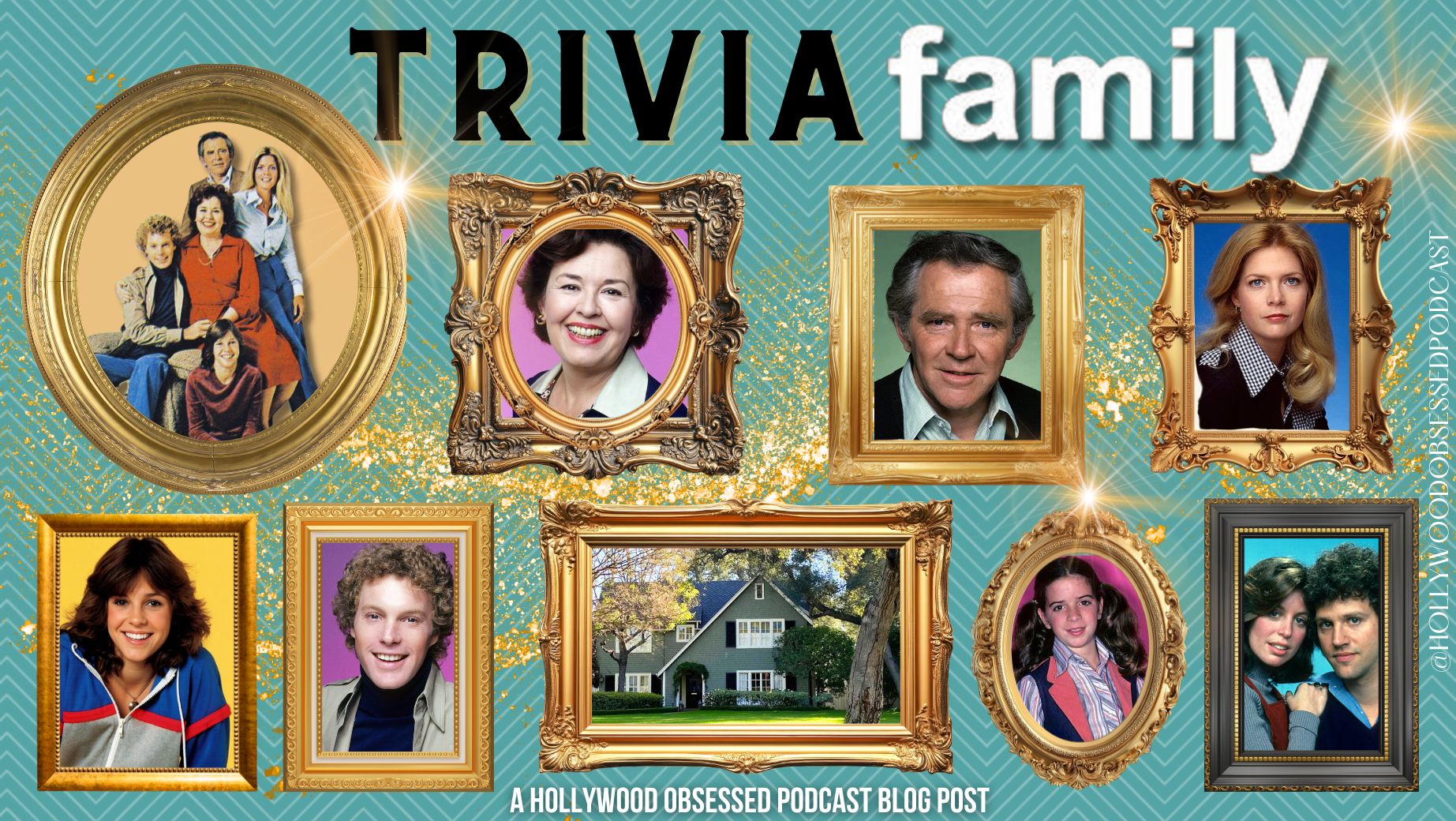
During the 1970s, television began shifting away from purely escapist sitcoms toward more socially conscious programming that reflected real-world issues such as feminism, racism, and the lingering impact of the Vietnam War. The era of Lassie rescuing Timmy from yet another well was giving way to bold storytelling from producers like Norman Lear, whose groundbreaking shows tackled once-taboo subjects. These series didn’t just entertain—they helped spark national conversations and encouraged audiences to confront topics that previously felt uncomfortable or unfamiliar.
This cultural shift came before the glossy, high-stakes worlds of “Dallas” and “Dynasty” popularized television’s fascination with wealth, power, and ambition. In 1976, ABC premiered “Family,” a deeply human drama that aired from March 9, 1976, to June 25, 1980. Set in suburban Pasadena, California, the series followed the Lawrence family as they navigated everyday life, generational tensions, and the rapidly changing social landscape of the time.
Known for its emotional honesty and strong character development, “Family” explored topics that were rarely shown on prime-time television in the mid-1970s. Storylines dealt with real-life issues such as divorce, teenage relationships, infidelity, feminism, homosexuality, addiction, and the challenges of growing older.
Instead of wrapping everything up neatly in one episode, the show allowed its characters to grow and change over time, with storylines continuing across multiple seasons. This approach helped make “Family” one of the early examples of truly character-driven television, where audiences became deeply invested in the lives, struggles, and triumphs of an entire family.
So when I recently had the opportunity to sit down with one of the show’s beloved stars—Emmy Award winner and television icon Gary Frank, best known as Willie Lawrence—and record a wonderful two-part conversation with him (Episodes 163 & 164 of Hollywood Obsessed Podcast), I did what any devoted fan would do…I put together this fun collection of “Family” trivia to celebrate this groundbreaking series.
So get ready to travel back to the era that shaped Generation X —because we’re about to revisit one of the most critically acclaimed television dramas ever made…“Family.”
*************************************************
“Family” was conceived in 1973 by producers Aaron Spelling and Leonard Goldberg. Inspired by the groundbreaking documentary-style series “An American Family,” they envisioned an intimate portrayal of middle-class family life. They enlisted Jay Presson Allen (screenwriter of “Cabaret” and “Funny Girl”) to write the pilot, with Mike Nichols producing.
Famed director Mike Nichols (“The Graduate”) was involved only in casting and producing the pilot episode; he did not participate in the ongoing series.
Actor Gary Frank began his film career in 1974 when director Richard Donner cast him in the television movie “Senior Year,” which later became the CBS series “Sons and Daughters.” After that series was canceled, Frank was cast just two days later by director Mark Rydell and producer Mike Nichols as Willie Lawrence in “Family,” earning the 1977 Emmy Award for Best Supporting Actor.
Cheryl Ladd auditioned for the role of Nancy but did not get the part. A year later, she was cast in another Spelling production, “Charlie's Angels.”
Three actresses portrayed Nancy Lawrence during the series’ run: Elayne Heilveil (season one), Jane Actman (one episode), and Meredith Baxter, who continued in the role for the remainder of the series and received two Emmy nominations for Outstanding Supporting Actress.
Doug Lawrence, played by James Broderick, was ranked #26 on TV Guide’s list of the “50 Greatest TV Dads of All Time” (June 20, 2004 issue).
Kristy McNichol starred as Letitia “Buddy” Lawrence and was nominated for the Emmy Award for Best Supporting Actress in a Drama Series three consecutive years (1977–1979), winning in 1977 and 1979. In 1980, she received a nomination for Outstanding Lead Actress in a Drama Series for “Family.”
Quinn Cummings first appeared on the series in the episode “Lifeline,” playing Marcie, a local girl who frequently accompanied Buddy.
In season 4, eleven-year-old Andrea "Annie" Cooper (Quinn Cummings) is adopted by the family after her biological parents, Kate and Doug's college friends, are killed in a car accident.
Actress Season Hubley guest starred in several episodes in 1976 and 1977 as Salina Magee, the love interest of Willie (Gary Frank).
The series received multiple Primetime Emmy Awards and nominations, including acting honors for Sada Thompson, Gary Frank, and Kristy McNichol.
Television historians often cite “Family” as part of a transitional era in television drama, bridging socially conscious 1970s programming with the serialized, character-driven dramas that became popular in the 1980s and 1990s.
Although primarily filmed on soundstages, exterior scenes of the Lawrence home were shot at a residence located at 1230 Milan Avenue in South Pasadena, California. Producer Mike Nichols wanted the home to appear authentically lived-in rather than designed solely for camera movement.
The series’ original theme music was written by John Rubenstein, who also played the recurring character Jeff. His initial piano-and-strings theme assigned a different musical instrument to represent each family member. At the network’s request, he composed a brighter theme beginning in season two, which was updated in later seasons.
Oscar winners Helen Hunt, Tommy Lee Jones, and Henry Fonda all appeared on the series, along with Oscar nominee Quinn Cummings.
Sada Thompson, best known for playing Kate Lawrence, won the Emmy Award for Outstanding Lead Actress in a Drama Series in 1978. Earlier, she earned a Tony Award for Best Actress in a Play for “Twigs” in 1972.
During her time on the series, Meredith Baxter (credited then as Meredith Baxter Birney) also appeared in the acclaimed political thriller “All the President's Men.”
The actresses who portrayed the Lawrence daughters, Kristy McNichol and Meredith Baxter, both publicly came out later in life—McNichol in 2012 and Baxter in 2009—approximately 30 years after the series ended.
Despite its loyal audience, ABC was often criticized for not fully promoting “Family,” including the decision not to air summer reruns, which may have helped grow its viewership. Toward the end of the series, cast members and showrunners expressed disappointment with the network’s level of support.
The initial showrunners of “Family” were Nigel McKeand and Carol Evan McKeand, who had been writers for “The Waltons.” After the fourth season, the McKeands departed and were replaced by Edward Zwick, who later produced the acclaimed series “Thirtysomething,” “My So-Called Life,” and “Once and Again.”
A 1979 episode directed by Joanne Woodward featured guest star Henry Fonda as Doug’s father, a man beginning to experience cognitive decline. Two years later, Fonda won an Academy Award for portraying a character with similar challenges in “On Golden Pond.”
The ABC drama ran 5 seasons (although they only got to 86 episodes).
In addition to starring as Doug Lawrence, James Broderick also directed episodes of the series and received a 1978 Emmy nomination for Outstanding Lead Actor in a Drama Series.
James Broderick died of thyroid cancer on November 1, 1982, in New Haven, Connecticut, at the age of 55. His son, Matthew Broderick, went on to become an acclaimed actor as well.
Seven years after the series ended, a reunion television movie was planned for the 1987–88 season, centering on the Lawrence children gathering for Kate’s remarriage following Doug’s death. The 1988 Writers Guild strike ultimately halted production, and the project was abandoned.
Sada Thompson died on May 4, 2011, in Danbury, Connecticut, at the age of 83 after battling lung disease.
Gary Frank and Carroll Newman (who was a producer on the series) met during the filming of the first season of “Family” and will celebrate their 50th wedding anniversary August 2026
On April 1 2026 episodes of "Family" will be available to stream on Tubi for free.
*************************************************
Some facts in this post were sourced from IMDb and Wikipedia—because even the most devoted TV fans occasionally need to check the charts to make sure our memory is in perfect prime-time condition.
If you’d like to dive even deeper into this groundbreaking series, be sure to listen to my conversation with Willie Lawrence himself, Emmy Award winner Gary Frank.
Our two-part Hollywood Obsessed interview (Episodes 163 & 164) is packed with nostalgia, fascinating behind-the-scenes stories, and wonderful memories from one of television’s most acclaimed dramas, “Family.” It’s a warm, candid conversation that fans of classic television won’t want to miss.
Listen now:
Episode 163 – HERE
Episode 164 – HERE

Growing up on the east coast, Tony's love for acting led him to take classes at the famous Herbert Berghof (HB) Studio in New York City. He then attended prep-school at Walnut Hill School of the Performing Arts in Natick, MA where he studied theater, dance, and voice.
Returning to New York for his final two years of high school, he appeared in several commercials, made his Off-Broadway debut in the Spanish-speaking play "The House with The Seven Balconies" (La Casa de Los Siete Balcones) alongside his mother, actress Gilda Mirós, and graduated from the Beekman School of New York.
Pursuing a theater degree, he studied at Whittier College in Southern California until he decided to give up acting and moved to Miami Beach - where he began a career in Public Relations. However, it wasn't until he started to write a nightlife column called "Beyond the Velvet Rope," for Miami Metro Magazine that he finally made a name for himself as a celebrated South Beach columnist and nocturnal personality known as "Mr. Nightlife." Since then, he has had a diverse writing career spanning 20 years and has written for national and international publications including Angeleno Magazine, ReFresh Magazine (UK), and TimeOut.
After moving to Los Angeles in 2005, he landed a job at the legendary Warner Bros Studios in Burbank as a VIP Tour Guide. After a successful yet brief stint there, he started a new career as a Casting Director at the Emmy Award-winning casting offices of Bunim-Murray Production in Van Nuys, CA where he worked …Read More
THIRD YEAR ANNIVERSARY - Celebrating Three Fabulous Years of Hollywood Obsessed Podcast – Part 2


