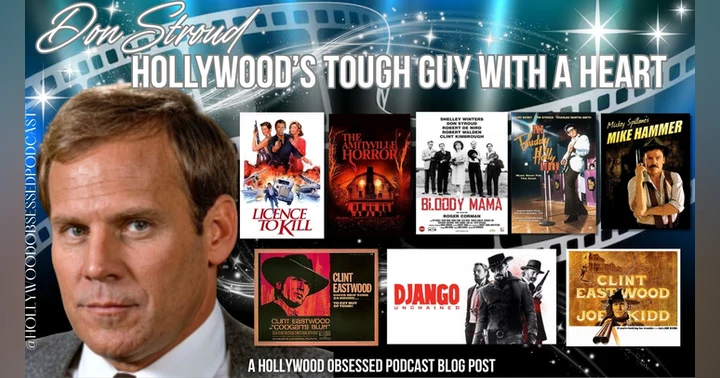
Trivia - Hollywood Legend James Mason
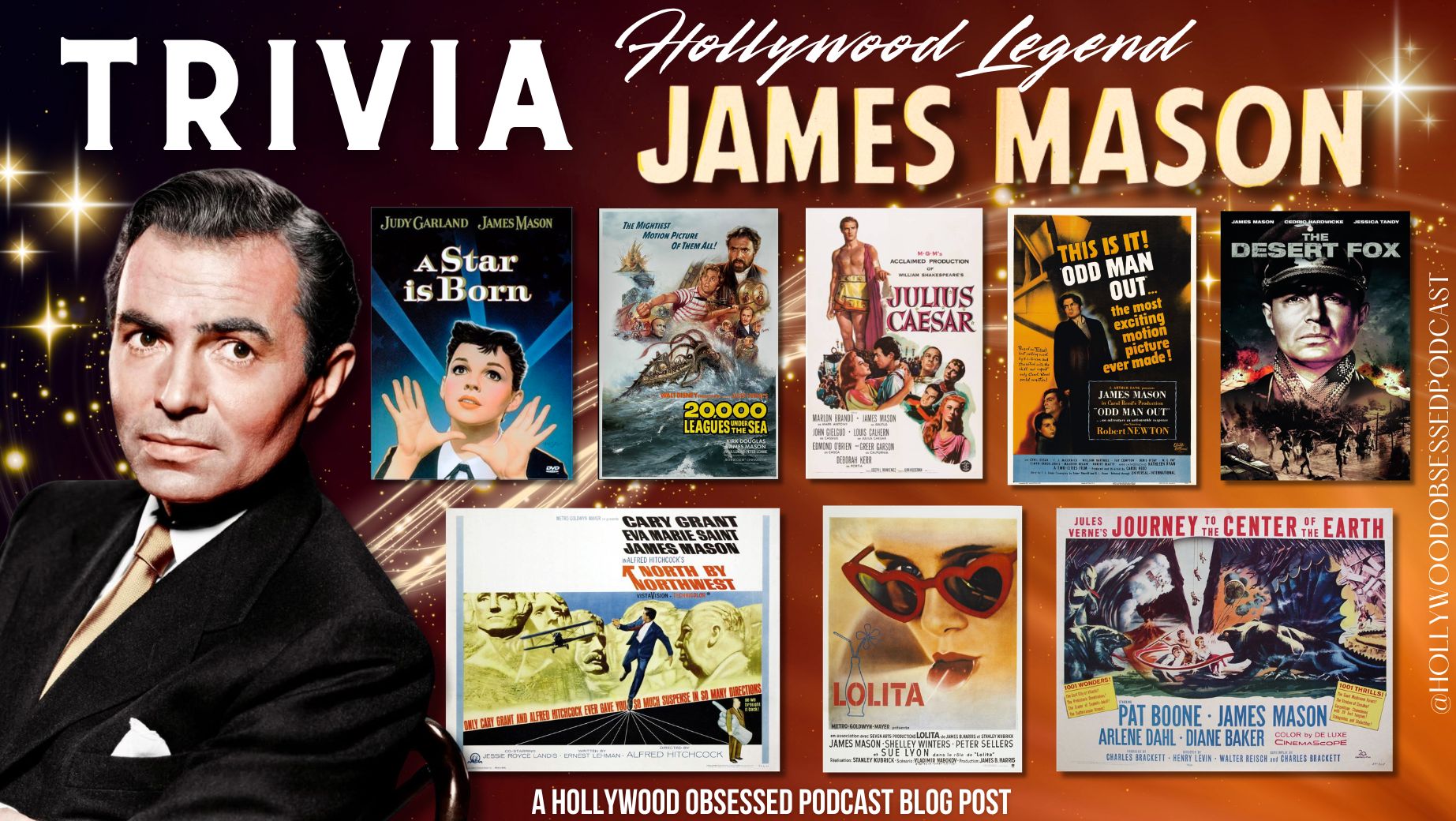
Few actors embodied classic Hollywood sophistication quite like James Mason. With his striking good looks, effortless charm, and unforgettable voice, Mason stood alongside legends such as Cary Grant and Tyrone Power as one of cinema's most admired leading men. Yet what truly set him apart was his remarkable ability to transition from romantic leading man to acclaimed character actor, allowing him to enjoy a career that spanned more than 130 films over five decades.
Born in Huddersfield, Yorkshire, Mason originally studied architecture at Peterhouse, Cambridge, and had no formal acting training. What began as a hobby in amateur theater eventually led him to London's Old Vic Theatre and a successful film career. By the 1940s, he had become one of Britain's biggest stars before making the leap to Hollywood, where his talent and versatility earned him widespread acclaim, three Academy Award nominations, and three Golden Globe Awards.
Mason's filmography is a masterclass in range. He captivated audiences as Brutus in Julius Caesar, General Rommel in The Desert Fox, Norman Maine in A Star Is Born, Captain Nemo in 20,000 Leagues Under the Sea, the suave spy Phillip Vandamm in North by Northwest, Humbert Humbert in Lolita, and the sinister Richard Straker in Salem's Lot. Whether portraying heroes, villains, adventurers, or deeply flawed men, Mason brought intelligence, depth, and elegance to every role.
In honor of my recent two-part conversation with his grandson, James "Duke" Mason, on Episodes 175 and 176 of Hollywood Obsessed Podcast, I've put together this collection of fascinating trivia celebrating one of Hollywood's most enduring stars. So join me as we take a journey through the remarkable career of one of Hollywood's greatest and most enduring stars.
Lights, camera, Mason!
*************************************************
James Mason began his acting career on the London stage, performing in West End productions before transitioning to films and becoming one of Britain's leading men in the early 1940s.
Although he became famous for portraying sophisticated gentlemen and refined villains in the tradition of Claude Rains, Mason stood nearly six feet tall—much taller than many audiences realized.
A committed pacifist, Mason refused military service during World War II. His decision proved controversial and caused a rift with members of his family that lasted for years.
James and Pamela Mason arrived in the United States in November 1946. Shortly afterward, Mason became embroiled in a lengthy legal dispute with producer David E. Rose over a proposed production company. After eighteen months in court, Mason ultimately prevailed.
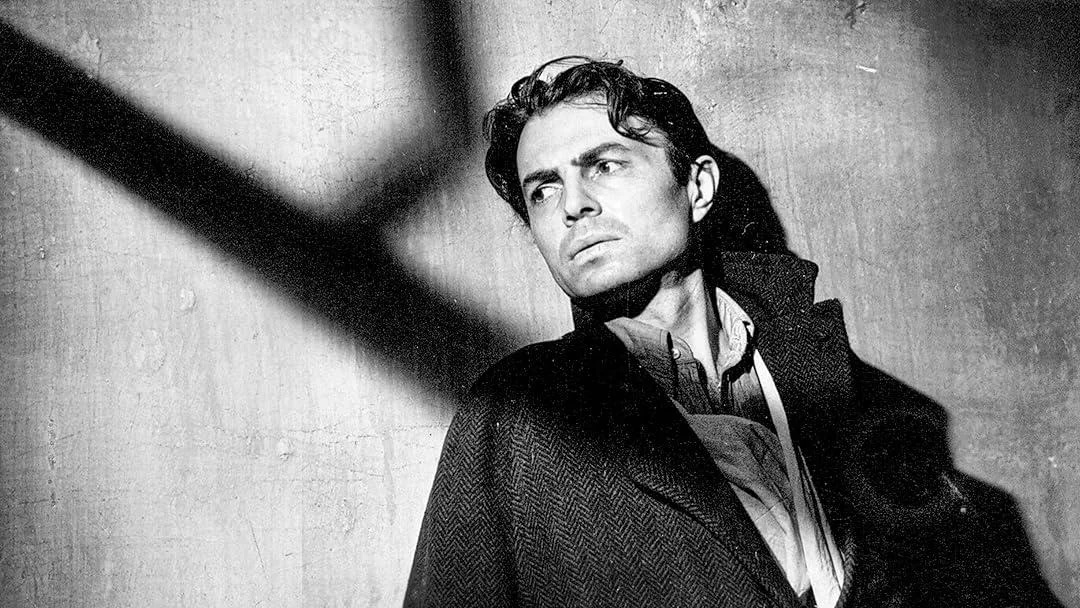
Mason considered his performance as Johnny McQueen in Odd Man Out (1947) to be the finest work of his career and regarded it as his favorite film directed by Sir Carol Reed.
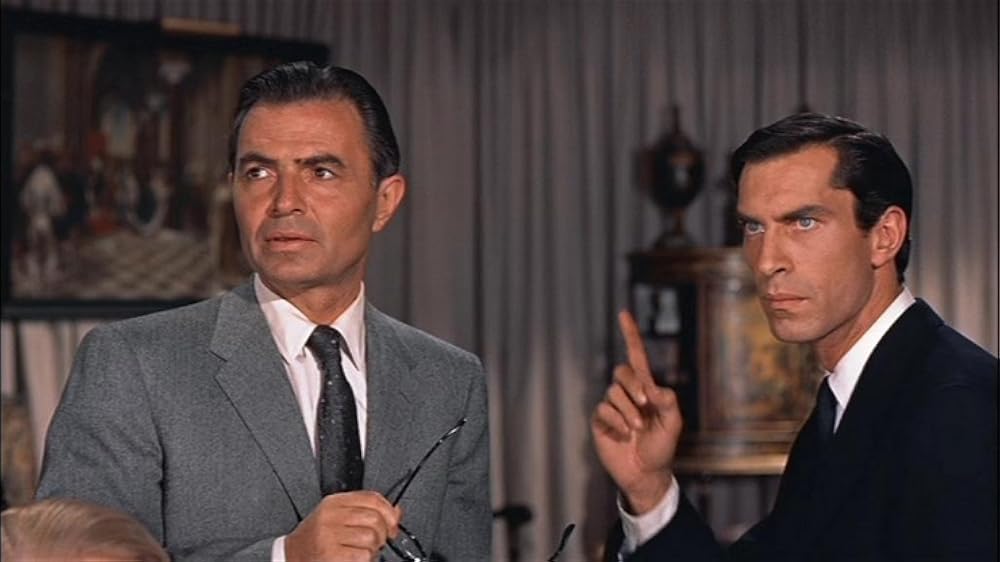
In Alfred Hitchcock's Rope (1948), Mason was mentioned as an actor who would make an excellent screen villain. Eleven years later, Hitchcock finally cast him in exactly such a role as the suave and sinister Phillip Vandamm in North by Northwest (1959).
During the production of Julius Caesar (1953), Mason and director Joseph L. Mankiewicz enjoyed a strong working relationship following their collaboration on 5 Fingers (1952). Marlon Brando reportedly felt that Mankiewicz favored Mason in several key scenes and threatened to leave the production unless the balance between their characters was restored.
Although Marlon Brando received top billing in Julius Caesar (1953), many film historians consider Mason's Brutus to be the true central figure of the story.
Both Spencer Tracy and James Mason believed that Edmond O'Brien's performance as Casca was the standout acting achievement in Julius Caesar (1953). Mason reiterated this opinion in his memoirs nearly thirty years later.
According to his autobiography, Mason was the first choice to play Norman Maine in A Star Is Born (1954) after Humphrey Bogart declined the role.
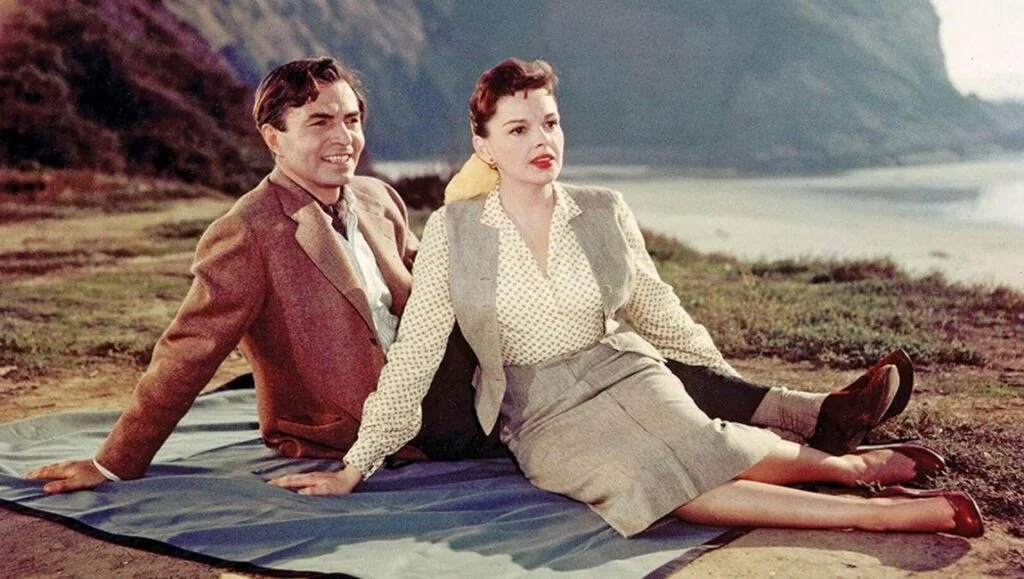
Mason and Judy Garland formed a close friendship while filming A Star Is Born (1954). Their bond remained strong for years, and following Garland's death in 1969, her daughter Liza Minnelli asked Mason to deliver the eulogy at her funeral.
Mason appeared in two beloved adaptations of Jules Verne classics: 20,000 Leagues Under the Sea (1954) and Journey to the Center of the Earth (1959).
In his autobiography, Mason revealed that he actually preferred the French-language dub of 20,000 Leagues Under the Sea, believing the French actors' voices better suited both his performance and that of co-star Kirk Douglas.
In addition to 20,000 Leagues Under the Sea, Mason and Kirk Douglas also appeared together in The Story of Three Loves (1953) and The Legend of Silent Night (1968).
While remodeling the former Hollywood home of silent-film legend Buster Keaton in 1952, Mason discovered several reels of Keaton's long-lost films. Recognizing their historical importance, he helped preserve them for future generations.
Mason portrayed Field Marshal Erwin Rommel twice on screen—first in The Desert Fox: The Story of Rommel (1951) and later in The Desert Rats (1953).
Mason famously refused to wear makeup whenever possible, preferring a more natural appearance on screen.
In 1958, Mason was scheduled to portray James Bond in a television adaptation of From Russia with Love, but the project was ultimately abandoned. A few years later, he was also considered for the role in Dr. No (1962) before Sean Connery won the part.
While filming Journey to the Center of the Earth (1959), Mason reportedly had little patience for co-star Arlene Dahl's movie-star glamour. Ironically, their off-screen relationship closely mirrored the tension between their characters in the film.
Mason suffered a serious heart attack in 1959 but recovered and continued working steadily throughout the following decades.
He received a star on the Hollywood Walk of Fame at 6821 Hollywood Boulevard on February 8, 1960.
During the filming of Lolita (1962), James Mason was 53 years old while co-star Sue Lyon was just 14, a casting choice that reflected the controversial nature of Vladimir Nabokov's novel.
Stanley Kubrick's Lolita reunited Mason with one of the most challenging roles of his career. Years later, Kubrick made a rare exception to his no-visitors policy and welcomed Mason to the set of The Shining (1980), where he can be seen in daughter Vivian Kubrick's behind-the-scenes documentary.
After completing Lolita, co-star Shelley Winters described Mason as "marvelous, sexy, intelligent, but aloof and technical" in his approach to acting.
Mason lived for a time with future wife Pamela Kellino and her husband Roy Kellino. Even after Mason and Pamela married, Roy reportedly continued living with the couple for a period—an unconventional arrangement that raised more than a few eyebrows.
In numerous interviews, actor Martin Landau revealed that he chose to play Leonard, the right-hand man to Mason's Phillip Vandamm in North by Northwest (1959), as secretly in love with his boss. Mason later joked that Landau's interpretation led many viewers to ask whether Vandamm was bisexual.
James Mason was instrumental in helping launch the career of a young actor from New Zealand by securing him one of his first major film roles. That actor was future star Sam Neill.
Mason and his wife Pamela were devoted cat lovers and even collaborated on a book about their beloved feline companions.
He once remarked that the reason he struggled to find a publisher for his autobiography, Before I Forget, was because it was simply "too polite."
Mason was the original choice to play the intimidating Professor Kingsfield in The Paper Chase (1973), but declining health forced him to withdraw. The role went to John Houseman, who won an Academy Award for his performance.
Mason admitted that he accepted the role in Mandingo (1975) primarily to help meet his alimony obligations.
A lifelong music lover, Mason told Playboy magazine in the late 1970s that while he disliked rock 'n' roll, he was a great fan of country music.
Mason starred alongside his wife, Clarissa Kaye-Mason, in both Age of Consent (1969) and the original television adaptation of Salem's Lot (1979).
Producer Richard Kobritz considered Mason his first and only choice to play the sinister Richard Straker in Salem's Lot. Mason enthusiastically accepted the role, relishing the opportunity to portray a servant of evil.
Reflecting on Heaven Can Wait (1978), Mason joked about the film's unusual directing arrangement between Warren Beatty and Buck Henry, noting that Beatty preferred having a trusted friend behind the camera whenever he appeared in front of it.
Although James Mason was never awarded a knighthood, many felt it was a glaring omission. He did, however, receive England's prestigious Golden Seal Award for his contributions to film.
Mason appeared in three films that were later selected for preservation in the National Film Registry by the Library of Congress: The Tell-Tale Heart (1953), A Star Is Born (1954), and North by Northwest (1959).
Throughout his career, Mason worked with many legendary directors, including Sidney Lumet, appearing in four of his films: The Deadly Affair (1967), The Sea Gull (1968), Child's Play (1972), and The Verdict (1982).
One of Mason's final screen triumphs came in The Verdict (1982), earning him his third and final Academy Award nomination for his portrayal of the corrupt attorney Ed Concannon.
Mason appeared in three Academy Award Best Picture nominees: Julius Caesar (1953), Heaven Can Wait (1978), and The Verdict (1982).
He had agreed to reprise his role from The Verdict for a proposed television pilot, but his death in 1984 caused the project to be abandoned.
Mason was cast as the Chief Magistrate in Three Sovereigns for Sarah (1985), but passed away before filming began. Fellow British actor Patrick McGoohan stepped into the role.
James Mason appeared in more than 130 films during a remarkable career that spanned five decades.
He was the father of producer Morgan Mason and actress-screenwriter Portland Mason.
Through his son Morgan, Mason became the father-in-law of Go-Go's lead singer Belinda Carlisle. He was also the grandfather of writer, commentator, and activist James "Duke" Mason.
Although Morgan Mason ultimately pursued a successful career as a film producer, he also served in the administration of President Ronald Reagan.
Following his death on July 27, 1984, at age 75 from a heart attack, James Mason was laid to rest at the cemetery in Corsier-sur-Vevey, Switzerland.
More than four decades after his passing, James Mason remains one of the most admired actors of Hollywood's Golden Age—celebrated for his elegance, intelligence, versatility, and unforgettable voice.
*************************************************
Some facts featured in this article were sourced from IMDb and Wikipedia.
If these trivia tidbits have left you wanting more James Mason, be sure to check out my fascinating two-part conversation with his grandson, James "Duke" Mason, on Hollywood Obsessed Podcast Episodes 175 and 176. Together, we explore James Mason's extraordinary career, enduring legacy, and lasting impact on Hollywood through a collection of entertaining stories, behind-the-scenes anecdotes, family memories, and insightful discussions about one of cinema's greatest stars.
Listen Here:
Episode 175 — HERE
Episode 176 — HERE

Growing up on the East Coast, Tony Miros developed a passion for acting at an early age, studying at New York City’s renowned Herbert Berghof (HB) Studio. He later attended Walnut Hill School for the Performing Arts in Natick, Massachusetts, where he trained in theater, dance, and voice.
Returning to New York to complete high school at The Beekman School, Tony began working professionally, appearing in commercials and making his Off-Broadway debut in "The House with the Seven Balconies" (La Casa de los Siete Balcones) alongside his mother, acclaimed actress and radio talk show host Gilda Mirós.
Tony continued his theater studies at Whittier College in Southern California before pivoting away from acting and relocating to Miami Beach, where he launched a successful career in public relations. It was there that he found his distinctive voice as a writer, creating the popular nightlife column "Beyond the Velvet Rope" for Miami Metro Magazine. The column established him as a celebrated South Beach personality, earning him the moniker “Mr. Nightlife.” Over the past two decades, Tony has built a diverse writing career, contributing to national and international publications including Angeleno Magazine, ReFresh Magazine (UK), and Time Out.
After moving to Los Angeles in 2005, Tony joined Warner Bros. Studios as a VIP Tour Guide before transitioning into casting at the Emmy Award-winning Bunim/Murray Productions. There, he worked on major series including MTV’s "The Real World" (Denver, Sydney, Hollywood), "Road Rules: … Read More
Trivia - Vamp