Trivia - Licence To Kill
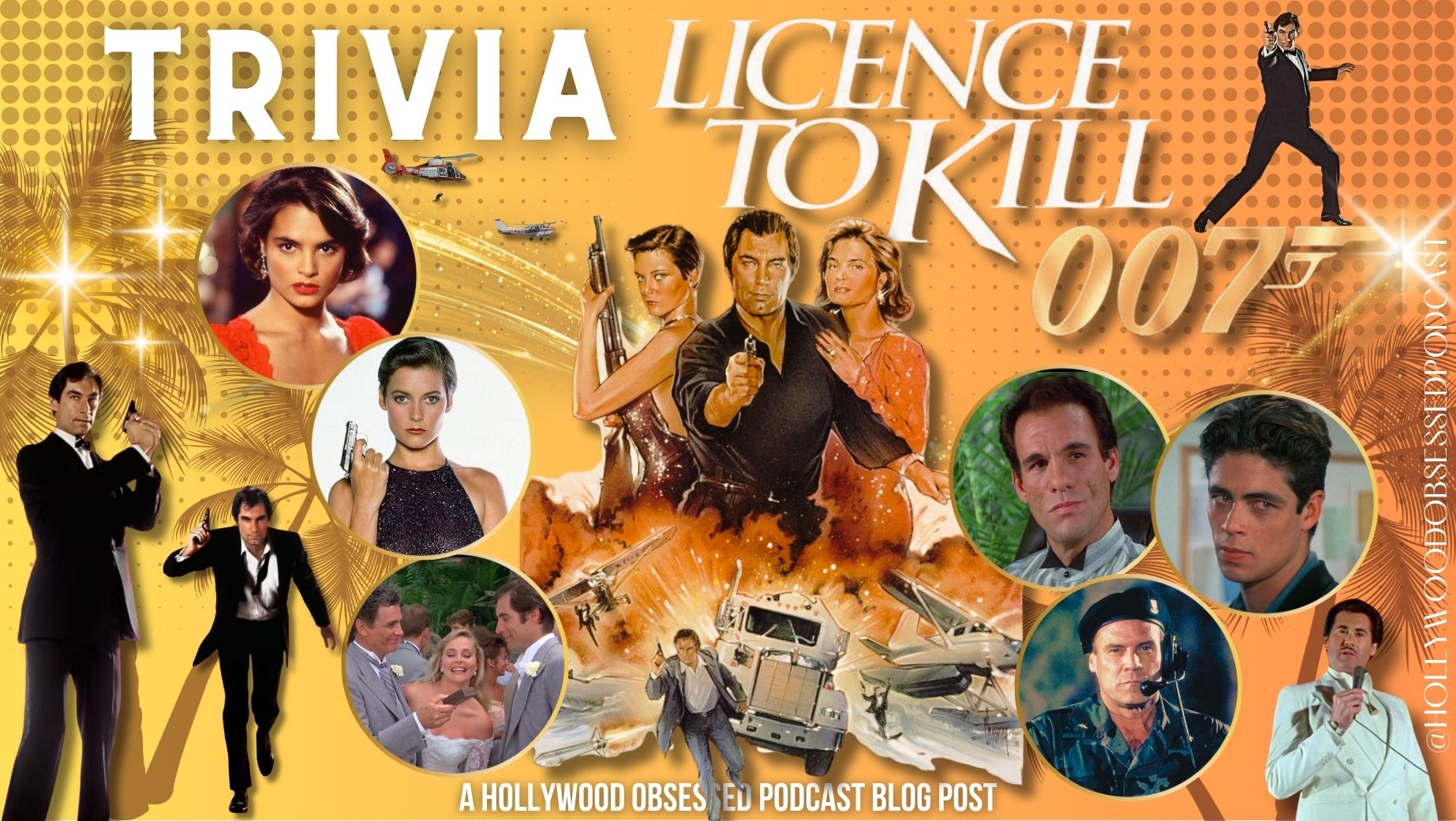
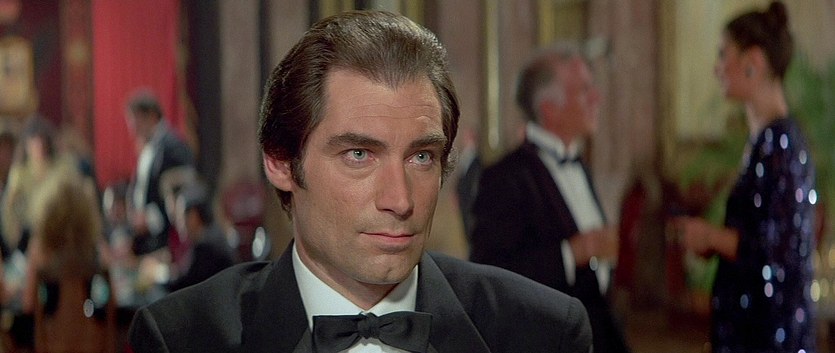
"Licence to Kill" was the sixteenth film in the James Bond series and the second—and final—entry in Timothy Dalton’s brief tenure as 007. Directed by John Glen, the 1989 film took Bond in a darker, grittier direction, with 007 resigning from MI6 and going rogue to seek revenge against ruthless drug lord Franz Sanchez, who orchestrates a brutal attack on Bond’s friend and CIA agent Felix Leiter, and the murder of Felix’s new wife Della (portrayed by former "Three's Company" star Priscilla Barnes) shortly after their wedding.
It was a very different kind of Bond film. Unfortunately, audiences at the time were largely resistant to Dalton’s intense, brooding interpretation of 007, which felt far removed from the lighter, more humorous formula they had grown accustomed to during Roger Moore’s tenure. Just six years later, "GoldenEye" would introduce Pierce Brosnan as Bond and usher the franchise in a more traditional direction.
But time has been very kind to "Licence to Kill." In the years since its release, the film has developed a passionate cult following, with many fans now considering it one of the most underrated Bond films—and Dalton’s portrayal of 007 remarkably ahead of its time. His grounded, serious approach in both "The Living Daylights" (1987) and "Licence to Kill" (1989) arrived just a little too early. Years later, Daniel Craig’s bruised, realistic interpretation of Bond would be embraced by audiences in a cinematic landscape that had changed dramatically.
Even Dalton’s Bond faced villains who felt more grounded and genuinely threatening than the cartoonish, world-dominating masterminds of earlier Bond adventures. There’s Franz Sanchez (Robert Davi), the vicious Latin American drug lord who rules through fear and operates by the philosophy that loyalty is more important than money. And then there’s Dario (Benicio Del Toro), Sanchez’s young, grinning, deeply sadistic henchman who commits horrific acts with an almost chilling indifference.
And that brings me to the inspiration for this article!
I recently had the incredible opportunity to spend an hour chatting with legendary character actor Don Stroud, who delivers a memorable performance in "Licence to Kill" as Colonel Heller, Sanchez’s intimidating head of security. Our fascinating conversation covered everything from Stroud’s remarkable Hollywood career and his experiences making "Licence to Kill" to working alongside Robert Davi, Benicio Del Toro, Timothy Dalton, and director John Glen.
Don takes us on an incredible journey through his unconventional career—from growing up in Hawaii and his early days as a surfer to becoming one of Hollywood’s most recognizable character actors, appearing in more than 100 films and 200 television shows.
So, before you dive into these "Licence to Kill" trivia facts, be sure to listen to both new episodes of Hollywood Obsessed Podcast Episodes 185 & 186 - “Surf, Stardom & Hollywood Tough Guys: The Don Stroud Story” — Parts 1 & 2 — are NOW STREAMING!
And who knows? By the time you finish, you may find yourself wanting to revisit this fascinating, underrated Bond film that was truly ahead of its time.
*************************************************
"Licence to Kill" was the first James Bond film not to use the title of an Ian Fleming story or novel. Although the story was largely original, it incorporated elements from Fleming’s "Live and Let Die" and “The Hildebrand Rarity,” along with a sabotage element influenced by Akira Kurosawa’s "Yojimbo."
"Licence to Kill" was the fifth and final Bond film directed by John Glen.
The film marked the final Bond appearances of Robert Brown as "M" and Caroline Bliss as "Miss Moneypenny." It was also the final Bond film to feature the work of screenwriter Richard Maibaum, title designer Maurice Binder, and producer Albert R. Broccoli.
The film was originally titled "Licence Revoked," but the title was changed during post-production after American test audiences associated the phrase primarily with driving licences.
The film was originally intended to be set in China. Richard Maibaum and Michael G. Wilson developed treatments involving drugs and a Golden Triangle warlord. Planned sequences included a motorcycle chase along the Great Wall of China and a fight inside the recently discovered Terracotta Army museum in Xi’an. However, restrictive demands from the Chinese government—including script approval rights—made filming there impractical. John Glen also felt that "The Last Emperor" had already diminished some of the novelty of filming in China.
"Licence to Kill" was the first—and remains the only—Bond film to include a United States Surgeon General’s tobacco warning in its closing credits. The film also featured product placement for Philip Morris’s Lark cigarettes.
For budget reasons, "Licence to Kill" became the first Bond film to be shot entirely outside the United Kingdom. Principal photography took place in Mexico and the United States, while interiors were filmed at Estudios Churubusco in Mexico rather than Pinewood Studios.
David Hedison became the first actor to play CIA agent Felix Leiter twice, having previously portrayed the character in "Live and Let Die" (1973). He had been considered to return in "The Living Daylights," but the role ultimately went to John Terry.
Legendary character actor Don Stroud played Colonel Heller, Franz Sanchez’s head of security—and, unbeknownst to Sanchez, a CIA mole.
Della Leiter’s wedding dress was made from re-embroidered French lace decorated with seed pearls and opal sequins. Two identical versions had to be created because Della’s attack was filmed before the wedding sequence. Seventeen meters of the material were required, at approximately $150 per meter.
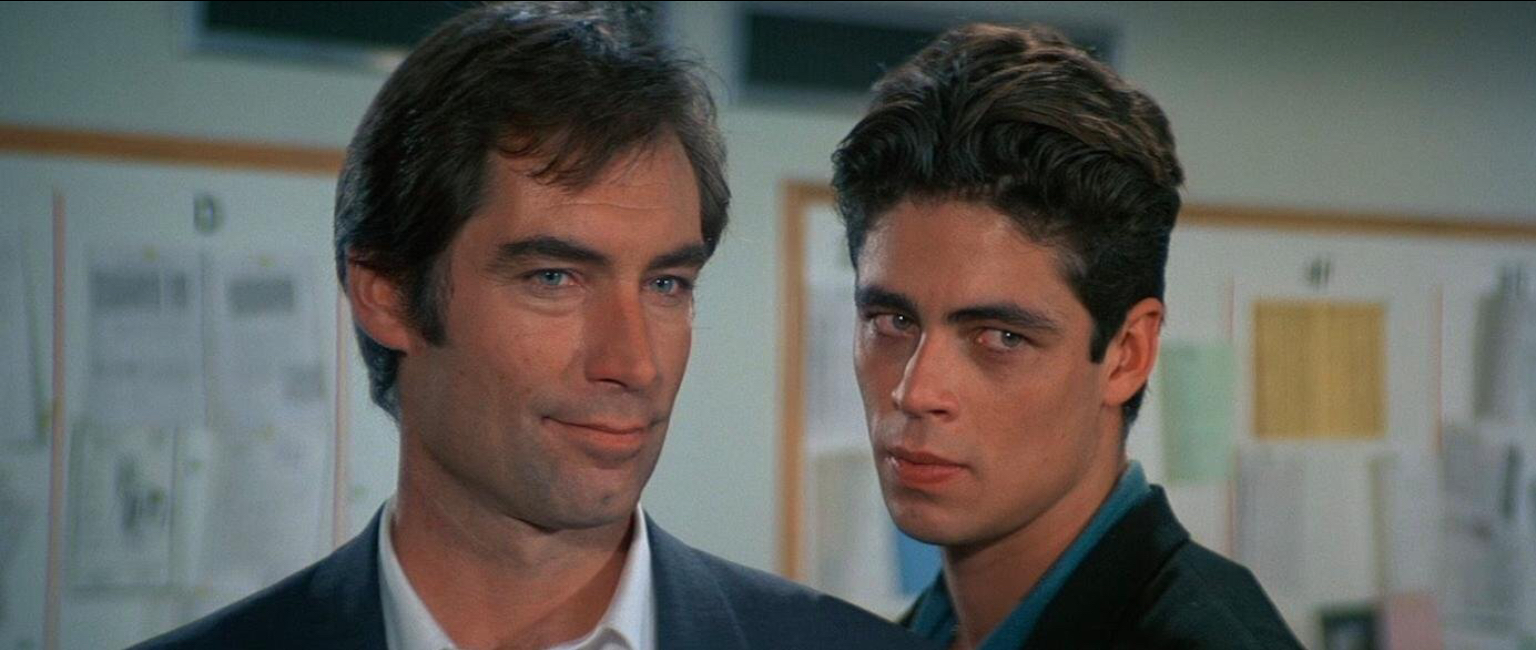
At 21 years old, Benicio Del Toro was the youngest actor to portray a villain in a James Bond film.
Las Vegas entertainer Wayne Newton made a brief but memorable appearance as televangelist Professor Joe Butcher. Newton had always wanted to appear in a Bond film and reportedly wrote to the producers expressing interest in a cameo. He got his wish.
The role of Bond girl Lupe Lamora was initially offered to actress Maria Conchita Alonso before Carey Lowell was cast.
"Licence to Kill "was Robert Brown’s final film. He died on November 11, 2003, at the age of 82.
In Bond Girls Are Forever, Carey Lowell revealed that she initially shut her eyes and flinched whenever she fired a gun. She had to be trained to keep her eyes open because a CIA operative would not react that way. She admitted that she still winces slightly when firing a handgun.
The maggots seen at Krest’s laboratory in Key West were actually white plastic fishing grubs.
To prepare for Franz Sanchez, Robert Davi researched Colombian drug cartels and studied the Colombian accent. He also read "Casino Royale" and based Sanchez partly on Ian Fleming’s descriptions of Le Chiffre, envisioning Sanchez as a kind of “mirror image” of James Bond.
Pam Bouvier is the first Bond girl to drink one of Bond’s signature vodka martinis.
The sequence involving the hijacking of Sanchez’s plane was filmed in Florida. Stuntman Jake Lombard jumped from a helicopter onto a plane, while Timothy Dalton performed portions of the sequence himself. The plane being towed by the helicopter was a life-sized model created by special effects supervisor John Richardson. During filming, David Hedison suffered an injury when his harness malfunctioned and he fell onto the pavement, leaving him limping for the remainder of production.
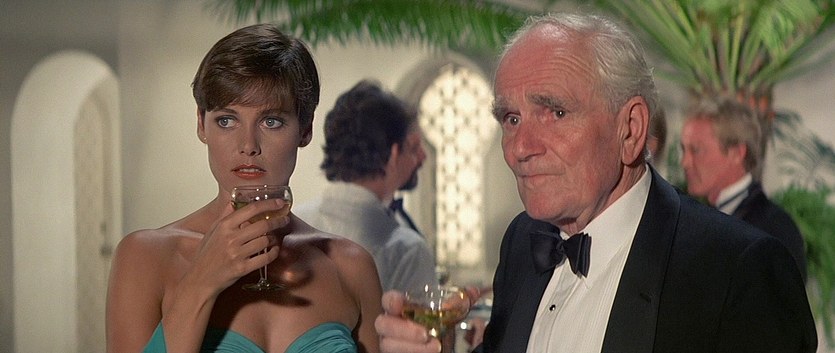
Gladys Knight’s “Licence to Kill” is the longest Bond title song. It reached No. 6 on the UK charts. Knight reportedly initially objected to singing a song containing the word “kill,” but eventually agreed.
"Licence to Kill" is the only James Bond film whose opening credits do not mention the title song or its performer.
The closing-credit song, “If You Asked Me To,” performed by Patti LaBelle, appeared on the B-side of the main title song’s 45 rpm single. It became a minor hit and later achieved much greater success when covered by Céline Dion.
"Licence to Kill" marked the end of John Barry’s long association with the Bond franchise. Michael Kamen composed the score after Barry was unavailable due to throat surgery.
Of all the Bond films, "Licence to Kill" gives Desmond Llewelyn one of his largest roles as "Q."
Robert Davi had to learn scuba diving for the sequence in which Sanchez escapes from an armored vehicle underwater in the Florida Keys.
Although Don Stroud has played countless villains and tough guys on screen, he demonstrated real-life courage in 1990 when he intervened to help a woman being mugged in New York City. Stroud was stabbed in the face during the incident, losing an eye and suffering partial facial paralysis.
Benicio Del Toro became the fourth Academy Award-winning actor to appear in a James Bond film. He was also the first Bond henchman to later win an Oscar and the second Bond villain to do so.
Dario’s handgun, which he points at Bond at Sanchez’s fortress, is a Walther P5—the same model previously carried by Bond in "Octopussy" and "Never Say Never Again."
Nearly all of the extras in the Barrelhead Bar sequence were hired locally in Mexico. The exception was the stripper, Jeannine Bisignano, who was flown in from Los Angeles.
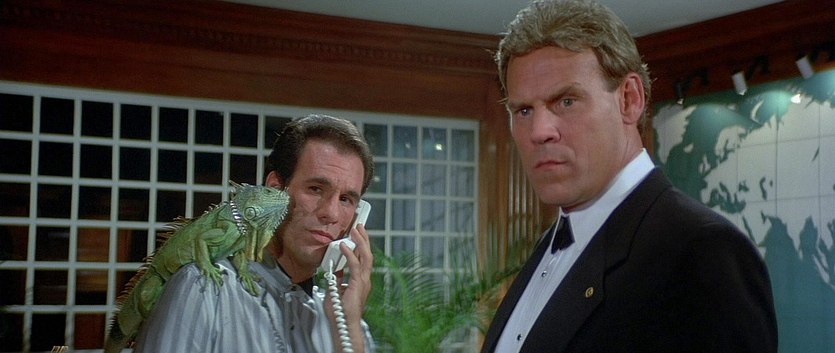
The mini-submarine seen in "Licence to Kill" was an updated version of the vessel used in "The Spy Who Loved Me". It was known as the Shark Hunter II.
The scene in which Bond resigns from MI6 was filmed at Ernest Hemingway’s former house in Key West.
During the scene in which Dario cuts Bond loose from the hook above the cocaine grinder, Benicio Del Toro accidentally cut Timothy Dalton’s hand. Filming had to stop while Dalton received stitches.
The spectacular barefoot waterskiing was performed by stuntman David Reinhart. Some close-up shots featured Timothy Dalton on a specially designed rig.
Timothy Dalton was originally expected to star in a third Bond film, tentatively titled "Property of a Lady." Written by Michael G. Wilson and Alfonse Ruggiero Jr., the film was scheduled to begin shooting in 1990. Legal problems surrounding MGM caused lengthy delays, and Dalton eventually announced his departure from the role in 1994, paving the way for Pierce Brosnan in "GoldenEye."
"Licence to Kill "earned more than $156 million worldwide. Although it was one of the less commercially successful Bond films in the United States, it received generally positive reviews, despite criticism of its darker tone.
Despite the film’s relatively modest commercial performance, director John Glen has called "Licence to Kill "his best Bond film. Many fans and critics have since embraced that assessment, praising the movie for its realism and darker approach.
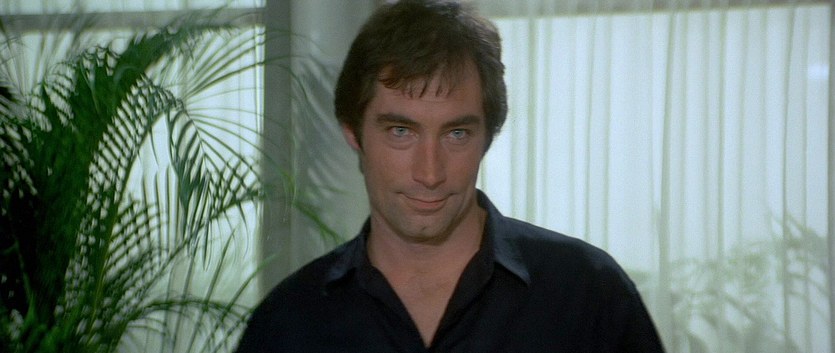
"Licence to Kill" was Timothy Dalton’s final appearance as James Bond. Six years later, "GoldenEye" introduced Pierce Brosnan as 007 and began a new era for the franchise.
*************************************************
Some of the facts featured in this article were sourced from IMDb and Wikipedia.
If these fun facts have you feeling nostalgic for this classic 007 adventure, be sure to check out my fascinating two-part conversation with legendary character actor Don Stroud on Hollywood Obsessed Podcast (Episodes 185 & 186). Don takes host Tony Miros behind the scenes of Licence to Kill, sharing stories about working with Timothy Dalton and a very young Benicio Del Toro, as well as his memories of attending the film’s New York premiere.
But Don’s story goes far beyond Bond. He opens up about the frightening 1990 incident in which he was stabbed while stepping in to help someone being attacked in Greenwich Village—and how the resulting facial scar, which nearly ended his career, ultimately became an unexpected part of his screen persona.
Don also reflects on his remarkable film and television career, from working with Clint Eastwood on "Coogan’s Bluff" and "Joe Kidd, "to sharing the screen with Shelley Winters and a young Robert De Niro in "Bloody Mama," and Gary Busey in "The Buddy Holly Story". He then looks back on the later chapter of his career, including his memorable appearance in Quentin Tarantino’s "Django Unchained"—and explains why he considers the legendary filmmaker one of the most important people in his career.
It’s another wild, candid, and unforgettable ride through the life and career of one of Hollywood’s great character actors.
Listen to the Full Conversation
Episode 185: HERE
Episode 186: HERE

Growing up on the East Coast, Tony Miros developed a passion for acting at an early age, studying at New York City’s renowned Herbert Berghof (HB) Studio. He later attended Walnut Hill School for the Performing Arts in Natick, Massachusetts, where he trained in theater, dance, and voice.
Returning to New York to complete high school at The Beekman School, Tony began working professionally, appearing in commercials and making his Off-Broadway debut in "The House with the Seven Balconies" (La Casa de los Siete Balcones) alongside his mother, acclaimed actress and radio talk show host Gilda Mirós.
Tony continued his theater studies at Whittier College in Southern California before pivoting away from acting and relocating to Miami Beach, where he launched a successful career in public relations. It was there that he found his distinctive voice as a writer, creating the popular nightlife column "Beyond the Velvet Rope" for Miami Metro Magazine. The column established him as a celebrated South Beach personality, earning him the moniker “Mr. Nightlife.” Over the past two decades, Tony has built a diverse writing career, contributing to national and international publications including Angeleno Magazine, ReFresh Magazine (UK), and Time Out.
After moving to Los Angeles in 2005, Tony joined Warner Bros. Studios as a VIP Tour Guide before transitioning into casting at the Emmy Award-winning Bunim/Murray Productions. There, he worked on major series including MTV’s "The Real World" (Denver, Sydney, Hollywood), "Road Rules: … Read More
Trivia - V: The Original Miniseries and The Final Battle