Trivia - The Blue Lagoon
When the racy coming-of-age film “The Blue Lagoon” premiered in the summer of 1980, it quickly became a global phenomenon—and transformed its two young stars, Brooke Shields and Christopher Atkins, into international superstars. For Atkins, it was an extraordinary film debut that launched him almost overnight into worldwide fame and made him one of the biggest teen idols of the 1980s.
Directed by Randal Kleiser, who had previously helmed “Grease,” the film tells the story of two young cousins, Richard and Emmeline, who become stranded on a remote tropical island in the South Pacific after surviving a shipwreck. With no adults or societal restrictions to guide them, the two grow up together in isolation, navigating the emotional and physical changes of adolescence. Eventually, they fall in love, marry, and have a child before their remarkable ordeal comes to an end.
Needless to say, the film’s subject matter was controversial when it was released. Its provocative themes, combined with the nudity and sexual content involving its teenage characters, generated plenty of publicity and controversy. Audiences were fascinated, and “The Blue Lagoon” became a massive box-office success, with lines reportedly stretching around the block as moviegoers flocked to see what all the uproar was about.
The overnight fame that followed was extraordinary. Brooke Shields and Christopher Atkins seemed to be everywhere, gracing magazine covers and newspaper pages around the world. Atkins, in particular, became a bona fide teen idol and one of the most sought-after young heartthrobs of the era. During my recent two-part conversation with Christopher, he opened up about what it was like to experience that incredible level of fame at such a young age—and what life was really like at the center of “The Blue Lagoon” phenomenon.
In honor of my fascinating conversation with Christopher on the latest two episodes of Hollywood Obsessed Podcast (Episodes 183 & 184), I thought it would be fun to take a nostalgic look back at the film that made him a superstar with a collection of fun facts, behind-the-scenes tidbits, and trivia about “The Blue Lagoon.”
So grab your sarong, imagine that you’re back to that gorgeous tropical island paradise, and enjoy!
*************************************************
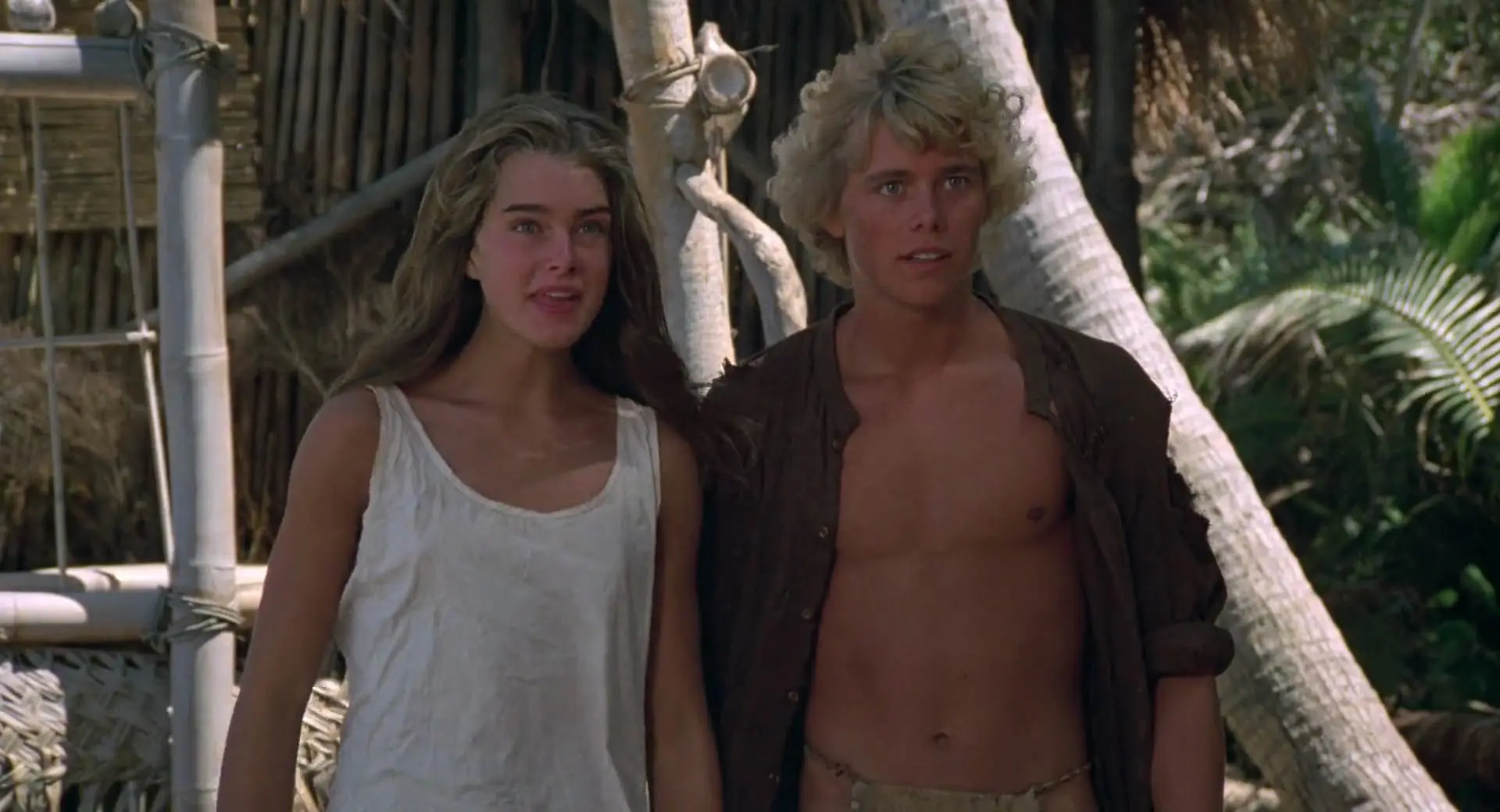
“The Blue Lagoon” was based on Henry De Vere Stacpoole's 1908 novel of the same name. The first film adaptation was the 1923 British silent film, which is now considered lost. Another British adaptation was released in 1949.
“The Blue Lagoon” marked Christopher Atkins' film debut.
Brooke Shields was cast as Emmeline Lestrange largely because of her acclaimed performance in the 1978 film “Pretty Baby.”
Principal photography began on June 18, 1979, and most of the film was shot on Nanuya Levu, a privately owned island in Fiji.
Director Randal Kleiser had long admired Stacpoole's novel and initially envisioned the two adult characters spending the entire movie nude. The concept scared off many potential actors and actresses.
Christopher Atkins had no previous acting experience and initially had no interest in pursuing a career in acting. A friend convinced him to attend the audition, and he ultimately won the role of Richard Lestrange from approximately 4,000 other young actors.
With filming scheduled to begin within days, the filmmakers agreed that Brooke Shields would remain predominantly clothed, with a body double used for the nude scenes. Casting director Joel Thurm then returned to thousands of audition tapes recorded over the previous year and selected Christopher Atkins, provided he agreed to have his hair permed to give him a more rugged, "savage" appearance.
At the time of filming, Brooke Shields was 5'10" while Christopher Atkins was 5'6". To prevent Shields from appearing significantly taller than Atkins, shallow trenches were dug into the beach for Shields to walk in. Atkins later joked that standing next to her could feel like having the Statue of Liberty beside him.
When Brooke Shields' original nude body double reportedly broke her back, the production turned to Kathy Troutt, who had been hired to catch and train dolphins for the film. Because she had a similar body type to Shields, Troutt was asked to serve as her replacement body double. She agreed and had no problem performing the nude swimming scenes.
The ship where the fire breaks out and the passengers are forced to abandon ship is called the Northumberland. The vessel was also used in several other films, including “Nate and Hayes,” “Tai-Pan,” and “White Squall.”
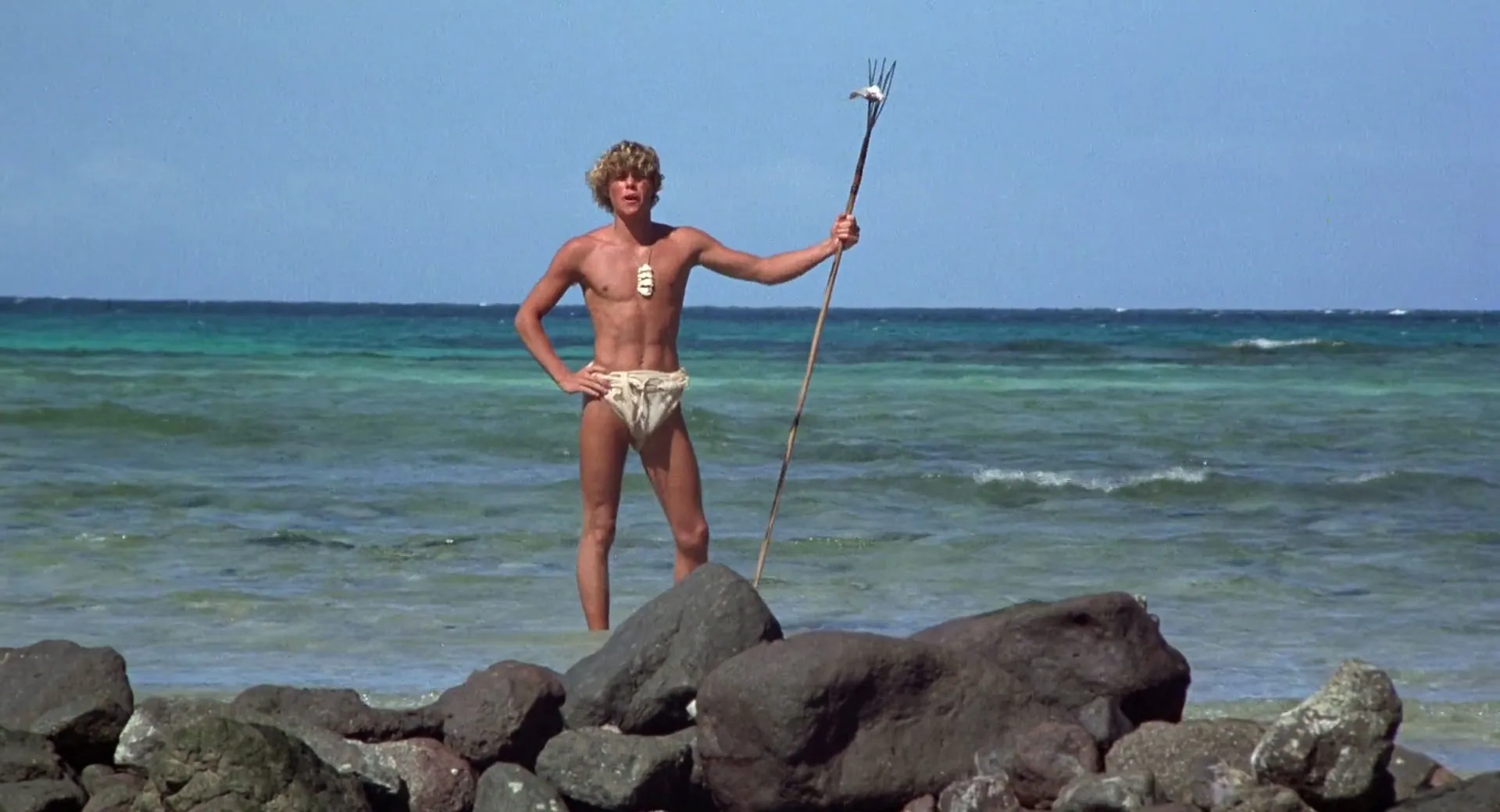
“The Blue Lagoon” received an Academy Award nomination for Best Cinematography for Néstor Almendros. Christopher Atkins was also nominated for a Golden Globe Award for New Star of the Year – Actor.
Most of the nude scenes involving Emmeline were performed by a body double. For scenes in which Brooke Shields herself appeared nude or partially nude, her hair was carefully arranged and secured over her breasts.
In one memorable scene, Leo McKern, who played Paddy Button, put a live crab into his mouth. He waited for the director to call "Action!" and then opened his mouth, allowing the crab to crawl out. According to accounts of the filming, no special effects or trick photography were used.
“The Blue Lagoon” remains one of the more controversial mainstream films of the 20th century. Its provocative subject matter generated significant headlines upon release and eventually contributed to a government inquiry. Brooke Shields was called to testify before the United States Congress, where she confirmed that body doubles had been used for the nude scenes and that her breasts were covered by her hair or clothing when she appeared on camera.
During a television interview, Brooke Shields addressed the controversy surrounding the film, explaining that the nude scenes were not difficult for her because she did not actually perform them. She also described filming the love scenes as simply part of her job.
Christopher Atkins performed most of his nude scenes without a body double. He later recalled that a female makeup artist would prepare him each morning before filming those scenes. Atkins also joked that following the success of “The Blue Lagoon,” virtually every role he was offered included a nude scene designed to showcase his backside.
The shark seen in the film was not a real shark. The effect was created by two divers operating a hollow rubber shark prop underwater.
The music and dancing performed by the cannibals were based on an actual traditional Fijian dance. The performers playing the cannibals were local Fijians who performed the dance themselves.
Christopher Atkins' body double was initially one of the seaplane pilots who transported the cast and crew from the Fijian mainland to the island where the film was being shot. He performed several nude scenes with Brooke Shields' body double and also handled some of Atkins' minor stunt work.
The scenes featuring the baby swimming underwater were filmed in an indoor pool using several different infants. Some shots of Richard and Emmeline swimming with the baby were filmed using a dummy.
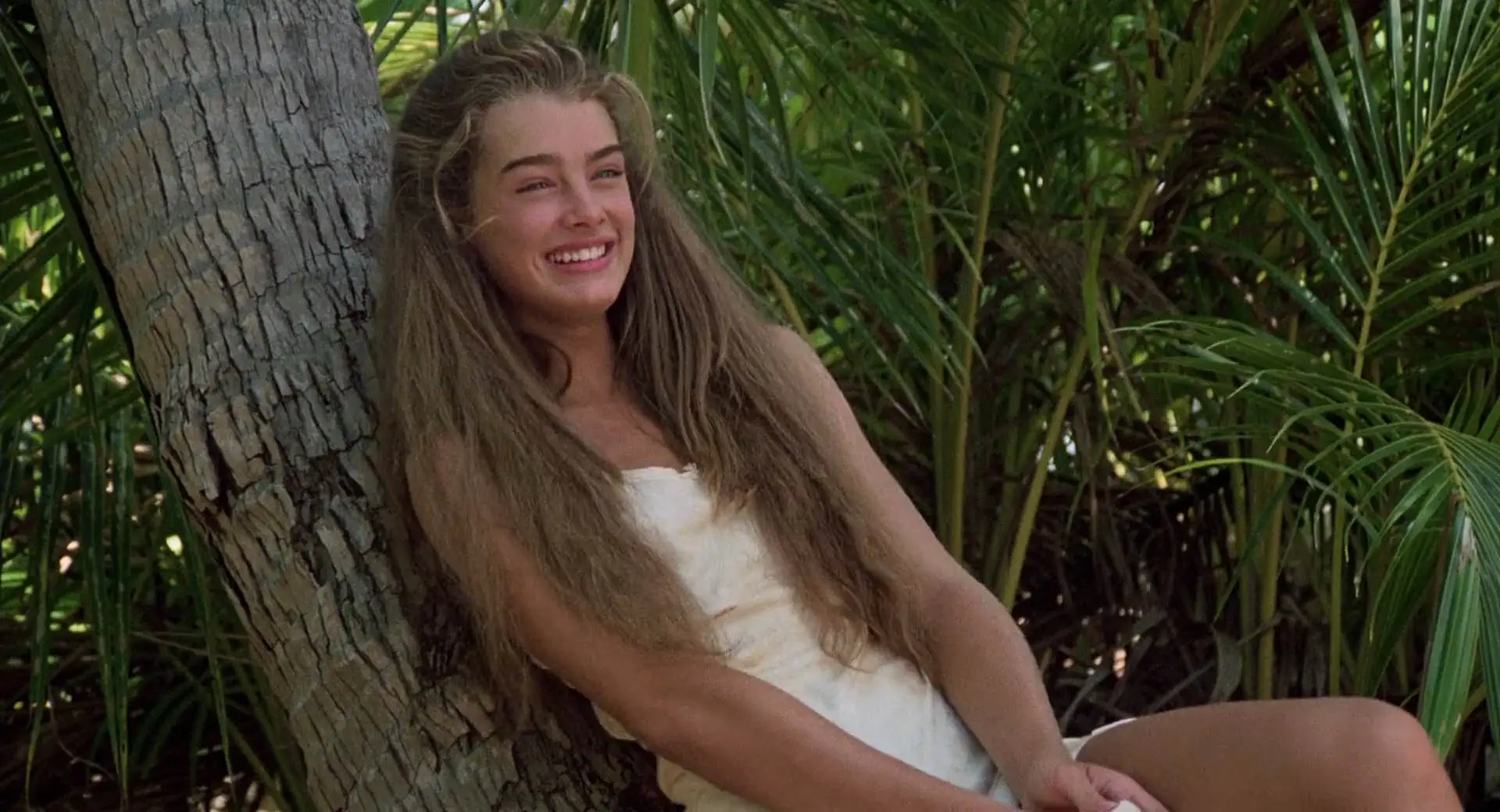
Although the film is based on Stacpoole's 1908 novel, it is a relatively loose adaptation. The screenplay incorporates several elements from the book but substantially changes the dialogue and tones down much of the original novel's sexual content and nudity.
Christopher Atkins later returned to the Blue Lagoon franchise, playing Mr. Christiansen in the 2012 television movie “Blue Lagoon: The Awakening.”
Underwater moving picture photography was performed by Ron Taylor and Valerie Taylor
The scene in which Christopher Atkins is pulled through the water by a dolphin was filmed at SeaWorld in San Diego.
With the exception of two sequences—the squid fight and the scene in which Richard releases the dolphins—the film was shot on location.
The ship used by Richard's father at the end of the film to search for the missing children was portrayed by the Golden Plover.
The film was panned by critics, who disparaged its screenplay, its execution, and Shields' performance; however, Almendros' cinematography received praise. In spite of the criticism, the film was a commercial success, grossing $58.8 million on a $4.5 million budget and becoming the ninth-highest-grossing film of 1980 in North America.
Plans for a sequel to “The Blue Lagoon” reportedly date back to 1982. Production was delayed for years because of a legal dispute between Columbia Pictures and the estate of Henry De Vere Stacpoole, who died in 1951 and retained rights to the novel outside the United States. Differences in copyright status between the United States and other countries further complicated the situation.
“Return to the Blue Lagoon,” released in 1991, picks up after the events of the original film. The sequel establishes that Richard and Emmeline have died by the time their boat is discovered, while their young son is rescued.
Gus Mercurio, who played the First Mate during the film's ending, also appeared in the 1991 sequel “Return to the Blue Lagoon.” In the sequel, he plays the First Officer aboard the ship that discovers Paddy, who has been renamed Richard, and brings him to Sarah Hargrave, played by Lisa Pelikan.
A television adaptation of the story, “Blue Lagoon: The Awakening,” premiered on Lifetime in 2012. The film stars Indiana Evans and Brenton Thwaites and offers a modernized take on the original premise.
In 2023, Brooke Shields released the documentary “Pretty Baby: Brooke Shields,” in which she reflected critically on her childhood and experiences working in the entertainment industry. Following the documentary's release, director Randal Kleiser reportedly attempted to contact Shields to clarify some aspects of her recollections of “The Blue Lagoon.” Shields chose not to engage, explaining that she did not want to reopen that chapter of her life.
*************************************************
Some of the facts featured in this article were sourced from IMDb and Wikipedia.
If these fun facts have you feeling nostalgic for the 1980 classic, be sure to check out my fascinating two-part conversation with actor, director, writer, and producer Christopher Atkins on Hollywood Obsessed Podcast (Episodes 183 & 184).
Atkins takes podcast host Tony Miros behind the scenes of the film that changed his life forever. More than 45 years after “The Blue Lagoon” became a worldwide phenomenon, Christopher admits that sometimes the entire experience still feels like a dream.
During their conversation, Christopher takes listeners back to the unlikely circumstances that landed a then-teenage newcomer on a deserted island in Fiji. With absolutely no acting experience, he auditioned for “The Blue Lagoon” alongside approximately 4,000 other young actors before ultimately winning the role of Richard.
He also shares hilarious, fascinating, and revealing behind-the-scenes stories about working with 14-year-old Brooke Shields, director Randal Kleiser's unusual plan to make him fall in love with Brooke before she even arrived on set, spending months filming on a remote island, experiencing sudden international fame, and why he believes a movie like “The Blue Lagoon” could never be made the same way today.
Whether you're a longtime fan of “The Blue Lagoon,” a Christopher Atkins fan, or simply love a great Hollywood story, these are two episodes you won't want to miss!
Listen to the Full Conversation
Episode 183: HERE
Episode 184: HERE

Growing up on the East Coast, Tony Miros developed a passion for acting at an early age, studying at New York City’s renowned Herbert Berghof (HB) Studio. He later attended Walnut Hill School for the Performing Arts in Natick, Massachusetts, where he trained in theater, dance, and voice.
Returning to New York to complete high school at The Beekman School, Tony began working professionally, appearing in commercials and making his Off-Broadway debut in "The House with the Seven Balconies" (La Casa de los Siete Balcones) alongside his mother, acclaimed actress and radio talk show host Gilda Mirós.
Tony continued his theater studies at Whittier College in Southern California before pivoting away from acting and relocating to Miami Beach, where he launched a successful career in public relations. It was there that he found his distinctive voice as a writer, creating the popular nightlife column "Beyond the Velvet Rope" for Miami Metro Magazine. The column established him as a celebrated South Beach personality, earning him the moniker “Mr. Nightlife.” Over the past two decades, Tony has built a diverse writing career, contributing to national and international publications including Angeleno Magazine, ReFresh Magazine (UK), and Time Out.
After moving to Los Angeles in 2005, Tony joined Warner Bros. Studios as a VIP Tour Guide before transitioning into casting at the Emmy Award-winning Bunim/Murray Productions. There, he worked on major series including MTV’s "The Real World" (Denver, Sydney, Hollywood), "Road Rules: … Read More
Trivia - Exorcist II The Heretic